The Subtle Art of Sound Design for Trailers
Anyone who has sat through a trailer and felt their pulse quicken knows that sound does more than accompany the picture. It shapes the experience. In my years working on commercial audio and film trailers, I have seen how a single well-placed sound effect can turn a good cut into one that people remember. The discipline is not about volume or shock value. It is about control, pacing, and understanding what the audience needs to feel at each moment.
The work begins long before anyone touches a fader. A typical project starts with a spotting session. The director, editor, and sound designer sit together and go through the picture frame by frame. We decide where the trailer music should breathe, where the voiceover lands, and where the Foley needs to support a specific action. These sessions are where the creative direction gets set. Without a clear spotting session, the rest of the process becomes guesswork, and guesswork shows in the final mix.
Why trailers demand a different approach
A trailer is not a scene from the film. It is a distinct piece of storytelling that has to hook someone in thirty seconds to two minutes. The sound design for trailers must compress emotional arcs that would normally take an hour to develop. That compression forces every decision. You cannot rely on slow builds or long atmospheric pads. Every element has to earn its place.
For example, a trailer for a psychological thriller might use a single low-frequency drone that grows almost imperceptibly. The viewer does not consciously notice it, but the tension climbs anyway. That is the kind of subtlety that separates professional audio post-production from something that just fills the silence. The same principle applies to game trailers. Players are used to interactive soundscapes, so a trailer for a game needs to deliver that same sense of immersion in a linear format. The sound effects have to be precise and the soundtrack must hint at the gameplay experience without giving everything away.
Tools of the trade
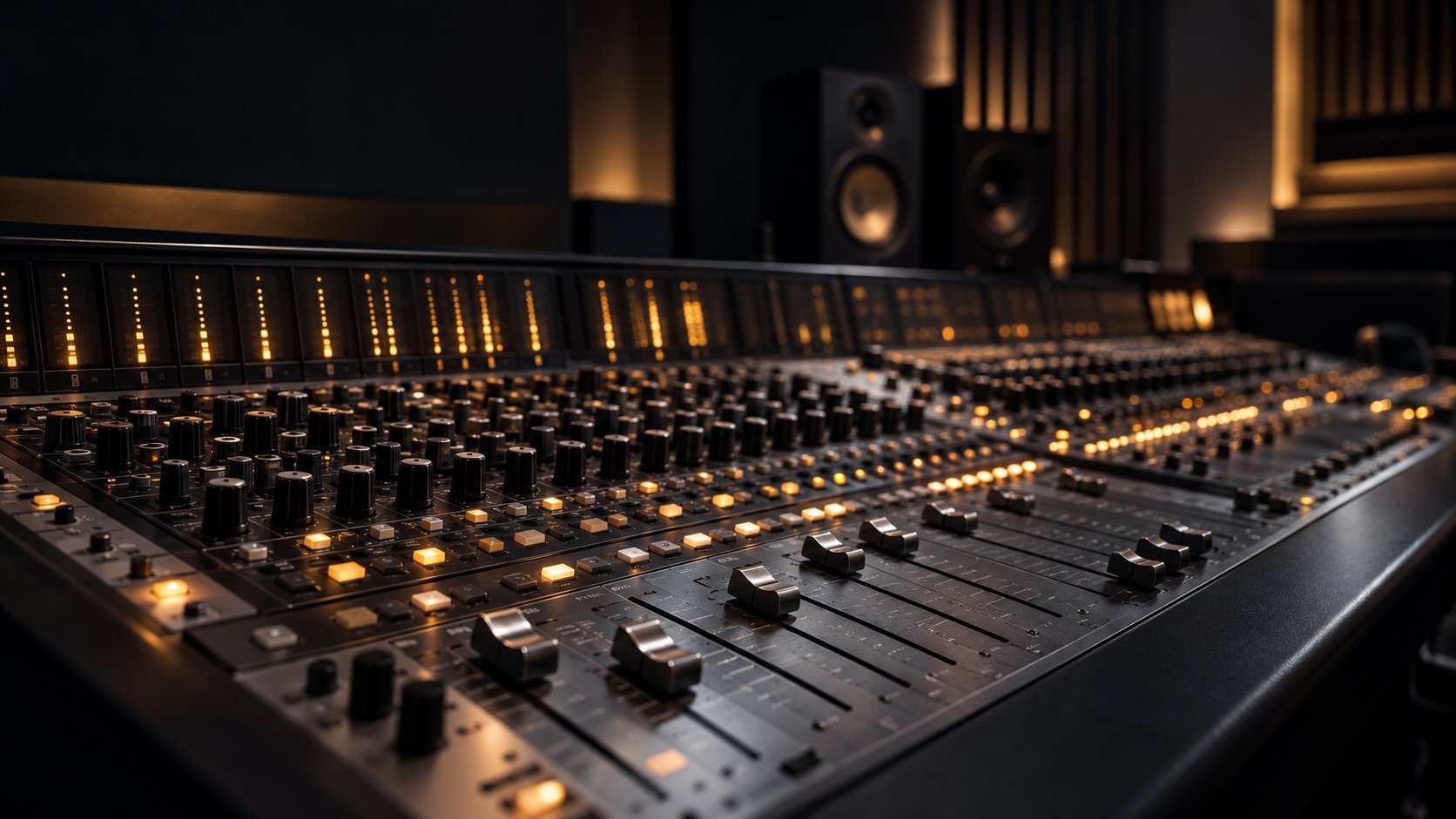
Most of the work happens inside Pro Tools. It is the industry standard for a reason. The session layout, the editing workflow, and the automation tools all matter when you are working against a tight deadline. A good sound designer knows how to move fast without sacrificing quality. That means having a well-organised set of SFX libraries, knowing which sounds layer well together, and understanding how to use EQ and reverb to place sounds in a believable space.
Dolby Atmos has become more common in trailer work, especially for theatrical releases. Mixing in Atmos adds a layer of complexity because you are no longer thinking in stereo. You are placing elements around the room, creating a bubble of sound that pulls the viewer into the world. That kind of cinematic sound takes time to get right. The re-recording mixer has to balance the immersive elements with the need for clear dialogue and strong musical hits. It is a trade-off between width and focus, and every project requires a different balance.
The role of music and voice
Trailer music has its own language. It is often built around short, punchy phrases that can be edited to fit the picture cuts. Hybrid scoring, which blends orchestral instruments with electronic textures, is common because it gives editors flexibility. You can cut a trailer to a hybrid track and still have room for sound effects and voiceover without the mix getting cluttered.
Voiceover in a trailer is a special skill. The voiceover artist has to deliver lines that feel natural but also carry weight. The same line can land differently depending on the reverb, the compression, and how it sits against the background sounds. I have heard a voiceover that was recorded perfectly but lost its impact because the mixer did not leave enough room around it. Good mixing means knowing when to let the voice lead and when to let it blend into the texture.
Sound branding is another layer. If the trailer is for a franchise or a product line, the sound design might need to echo elements from previous entries. A familiar sound effect can trigger recognition and build continuity across a series of film trailers. That consistency matters, especially when the audience has already formed expectations.
Practical realities of the craft
The phrase sound design for trailers covers a lot of ground. It includes the creation of original sounds, the selection of library material, the layering of Foley, and the final polish in the mix. It is not a single skill but a combination of many. A sound designer working on trailers needs to be comfortable with music editing, dialogue editing, and sound effects all in the same session. The job rarely fits into neat categories.
One of the hardest lessons I learned early on was how to edit for rhythm. A trailer has a musical pulse even when there is no music playing. The sound effects have to hit on the right beats. A door slam that lands a fraction of a second late feels wrong, even if the audience cannot tell you why. That precision comes from experience and from working closely with the editor and composer. The spotting session is where that rhythm gets mapped out, but the execution happens in the editing suite.
Another reality is the budget. Not every trailer has the luxury of a full orchestral score or a week of Foley recording. Sometimes you work with what you have. That is where SFX libraries and creative layering come in. A good sound designer can make a library sound feel original by combining it with something unexpected. A creaking door layered with a distant animal call can become something entirely new. The art is in the combination, not just the source.
Mixing for different platforms
Trailers end up in cinemas, on streaming services, on social media, and at live events. Each platform has its own technical requirements. A mix that sounds great in a Dolby Atmos theater might be muddy when played through a phone speaker. The re-recording mixer has to create a master that translates well across all those environments. That means checking the mix on different playback systems and making adjustments to the low end, the stereo width, and the dynamic range.
Commercial audio work shares some of the same challenges. A commercial needs to grab attention in a few seconds, often in a noisy environment like a sports bar or a crowded subway car. The sound design has to be clear and direct. Trailers are similar in that sense. Both formats rely on the same principle: every sound has to justify its existence. If a sound effect is not serving the story or the emotional beat, it should not be there.
Learning by listening
The best way to improve at sound design for trailers is to study the work of others. Watch trailers with the sound turned up and listen to how the elements are layered. Notice where the music drops out to let a sound effect or a line of dialogue cut through. Pay attention to the transitions between scenes. A good trailer uses sound to smooth over cuts that might otherwise feel jarring.
I still do this regularly. I will pull up a trailer for a film I have not seen and try to map out the sound design choices. What sounds are original? What sounds are from libraries? How did the mixer handle the transition from a quiet moment to a loud one? Those exercises keep me sharp and remind me that there is always more to learn.
The field changes, but the fundamentals stay the same. Good sound design for trailers is about serving the story, respecting the audience, and knowing when to be subtle and when to be bold. It is a craft that rewards patience, listening, and a willingness to try something that might not work on the first pass. Every project is a chance to refine that balance.